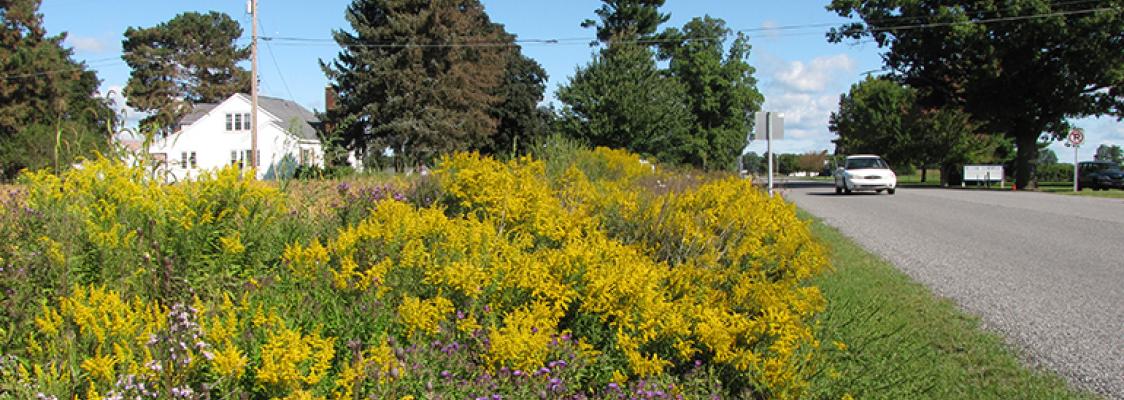

Pollinator Conservation: Roadsides

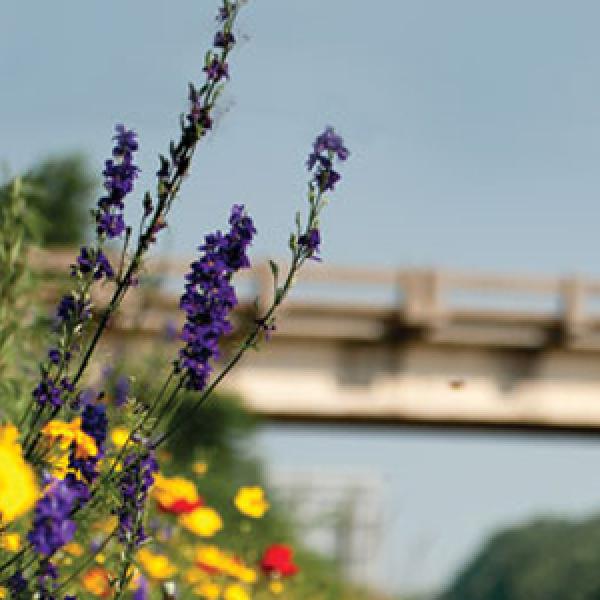
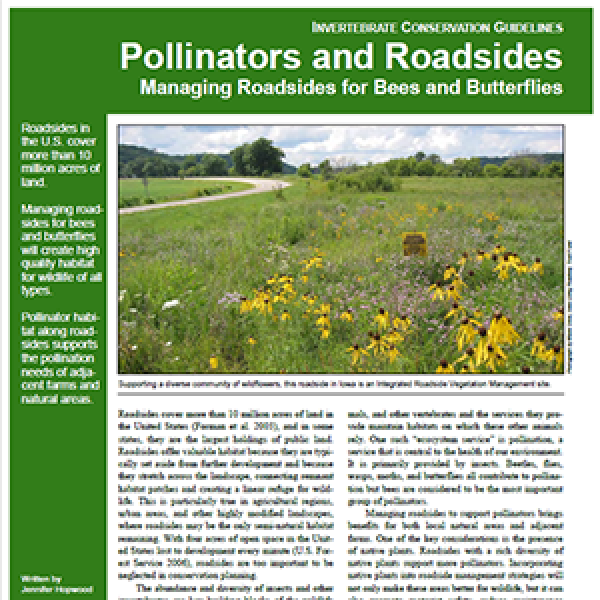
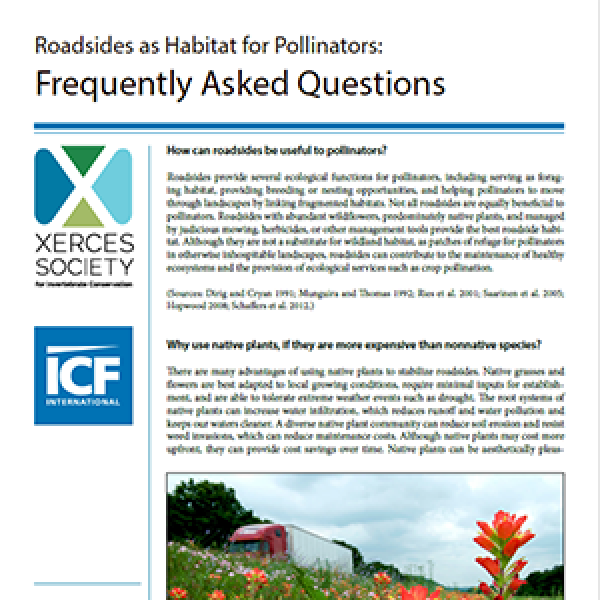
With more than 10 million acres of land in roadsides in the United States alone, transportation rights-of-way are a significant, yet often overlooked, resource for pollinator conservation. In landscapes denuded of natural areas by large scale agriculture or urbanization, roadsides are an increasingly important component of regional habitat networks. They frequently support native vegetation, providing refuge for wildlife and connecting fragmented habitat. The wildlife living on roadsides touches communities in every state, province, and county of North America.
Pollinators and Roadsides: Managing Roadsides for Bees and Butterflies provide a concise overview of the conservation potential of roadside habitat and offer practical information on how to maximize the value of these areas for pollinators while meeting basic traffic safety requirements.
These guidelines synthesize the previous study of native bees in roadside rights-of-way conducted by Jennifer Hopwood, Xerces Society’s Midwest pollinator outreach coordinator. Jennifer’s research demonstrated that bees were twice as abundant on roadsides with native prairie vegetation than on those dominated by nonnative plants, and that native roadsides supported a third more bee species than roadsides with nonnative plants.
These findings are reinforced by studies from North America and Europe that consistently show that roadsides have a role to play in conserving bees, butterflies, and other pollinating insects. Pollinators and Roadsides draws on these studies, as well as the experience of roadside managers, to identify ways in which current maintenance practices can be adapted to benefit pollinators.
Support for the development of these guidelines was provided by The Ceres Foundation, CS Fund, Disney Worldwide Conservation Fund, Natural Resources Foundation of Wisconsin, Turner Foundation, and The Wildwood Foundation.