Wings Magazine

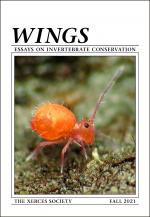
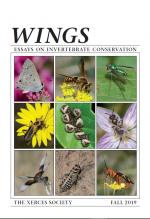
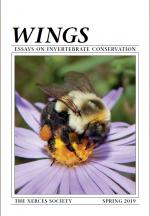
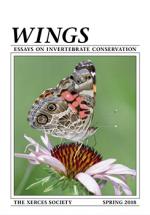
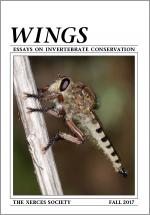
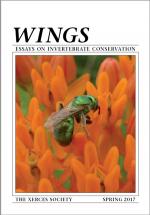
Wings: Essays on Invertebrate Conservation, our membership magazine, is published twice each year. Every issue features spectacular full-color photography by leading photographers and articles by well-respected scientists and conservationists, such as E.O. Wilson, Thomas Eisner, May Berenbaum, Robert Michael Pyle, and Sue Hubbell.

Join the Xerces Society and receive Wings

Wings archive / Purchase past issues


Contents of the current issue (fall 2009)

Much conservation effort is devoted to protecting big places and big animals: ancient forests, wild-flowing rivers, spotted owls, salmon. When you protect a large landscape, of course you are providing for invertebrates. By not logging, building roads, or over-grazing you are essentially protecting habitat for both the big and the small, but the latter are seldom part of the plan. In this issue of Wings, we explore the idea of “piggyback” conservation, how the conservation of one species can lead to the protection of others.

  • Introduction, by Scott Hoffman Black
  • Piggyback Conservation, by Claire Kremen: Invertebrates are generally overlooked in many conservation efforts. Thus, despite their importance, they often benefit by chance rather than intention.
  • Butterflies and Fire: Ashes or Phoenix?, by Scott Hoffman Black: Controlled fire is widely used to maintain healthy grassland, but careful planning is needed to avoid harming butterflies.
  • Game Birds, the Farm Bill, and Invertebrates: a Win-Win-Win Situation, by Wendell Gilgert: In many regions of North America, hunting has been a major motivation for creating habitat that benefits insects.
  • Missed Opportunities on the Grassy Knoll: Saving the Northeast’s Grassland Invertebrates, by Sacha Spector: Government grants are given to manage farm grasslands for wildlife, and such management can also offer great potential for insect conservation.
  • Can a Bird Save a Living Fossil?, by Piotr Naskrecki: Horseshoe crabs seem like relics from a prehistoric era. Their future is closely tied to the fortunes of a migratory shorebird, the red knot.
  • Xerces News: Xerces adds new regional offices; major grants awarded to the Society to protect pollinator habitat; and a change in the basic membership rate.

The Xerces Society • 4828 SE Hawthorne Blvd. Portland, Oregon 97215 USA • tel 503.232.6639 • fax 503.233.6794 • info@xerces.org
site mapcontactgivecontact the webmaster