As a science-based organization, the Xerces Society produces dozens of publications annually, all of which employ the best available research to guide effective conservation efforts. Our publications range from guidelines for land managers, to brochures offering overviews of key concepts related to invertebrate conservation, from books about supporting pollinators in farmland, to region-specific plant lists. We hope that whatever you are seeking—whether it's guidance on making a home or community garden pollinator-friendly, advice on developing a local pesticide reduction strategy, or detailed information on restoring habitat—you will find it here!
Find Publications
Use the search functions to sort by publication type (books, guidelines, fact sheets, etc.), location, and/or subject (agriculture, gardens, pollinators, pesticides, etc.).
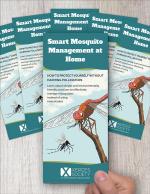
How to Protect Yourself Without Harming Pollinators
This brochure discusses the risks posed by backyard mosquito sprays and covers simple and environmentally friendly practices to effectively manage mosquitoes instead of using insecticides.
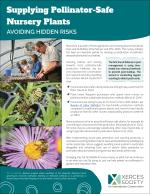
AVOIDING HIDDEN RISKS
Many producers strive to provide pollinator-safe plants, but may be unknowingly substituting other risky insecticides or using fungicides detrimental to pollinators. In this fact sheet, Xerces suggests which insecticides to avoid altogether and which to refrain from use on pollinator-attractive plants during the last two weeks before sale.
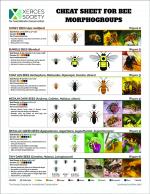
Bees are difficult to identify to species or family without having pinned specimens. But bee richness at a site can be measured by identifying bees to groups based on their morphology (also known as morphogroups), which use characteristics that can be seen in the field to categorize bees.
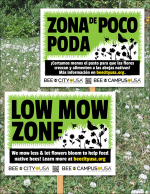
Letrero bilingüe para jardín
Are you mowing less and adding native flowers to your lawn or field to feed the bees? Designed for Bee City USA and Bee Campus USA affiliates, but available for public use, this two-sided Low Mow Zone sign can help educate the public and ensure your site is correctly maintained.
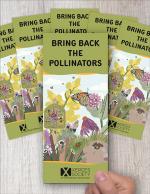
Pollinators are essential to the health of our environment and for bountiful farm crops. There are four straightforward steps that you can take to help them: grow flowers, provide nest sites, avoid pesticides, and share the word.
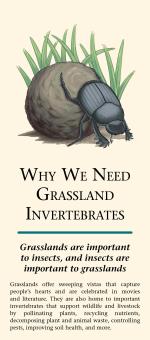
Grasslands are important to insects, and insects are important to grasslands
Grasslands offer sweeping vistas that capture people’s hearts and are celebrated in movies and literature. They are also home to important invertebrates that support wildlife and livestock by pollinating plants, recycling nutrients, decomposing plant and animal waste, controlling pests, improving soil health, and more.
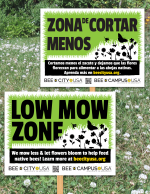
Bilingual Yard Sign (Cartel bilingüe para jardín)
Are you mowing less and adding native flowers to your lawn or field to feed the bees? Designed for Bee City USA and Bee Campus USA affiliates, but available for public use, this two-sided Low Mow Zone sign can help educate the public and ensure your site is correctly maintained.
Art & Craft Activity Series
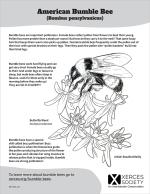
Learn more about the American bumble bee (
Art & Craft Activity Series
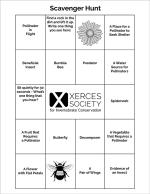
Looking for a fun—yet educational—outside activity? Kids can complete this scavenger hunt meant to facilitate learning of key invertebrate terms in a variety of supervised settings. Great for Farmers Markets and other outdoor events!
Available in single- and double-sided files for different printers.
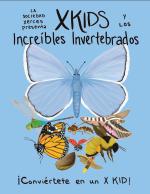
El cuadernillo de las actividades de Xperiencia
Embárcate en una aventura con Blue para conocer a otros invertebrados y descubrir sus superpoderes.