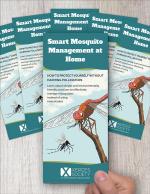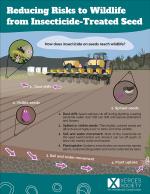
As a science-based organization, the Xerces Society produces dozens of publications annually, all of which employ the best available research to guide effective conservation efforts. Our publications range from guidelines for land managers, to brochures offering overviews of key concepts related to invertebrate conservation, from books about supporting pollinators in farmland, to region-specific plant lists. We hope that whatever you are seeking—whether it's guidance on making a home or community garden pollinator-friendly, advice on developing a local pesticide reduction strategy, or detailed information on restoring habitat—you will find it here!
Find Publications
Use the search functions to sort by publication type (books, guidelines, fact sheets, etc.), location, and/or subject (agriculture, gardens, pollinators, pesticides, etc.).

with scientific literature about commercial bumble bees and bee pathogens (August 26, 2014)
Pathogens from managed pollinators are thought to have played a significant role in that decline. Thus, as we explained in our January 2010 petition, regulation of commercial bumble bees is a highly time-sensitive issue... we are writing to provide you with a short synthesis and reference list of some key and recent studies regarding commercial bumble bees and bumble bee pathogens. It is our hope that this science will inform and help activate your efforts to protect native bumble bees.

How to Create Habitat for Pollinator Insects on Golf Courses
These guidelines are focused on providing habitat for pollinator insects, primarily native bees. Making Room provides information on the natural history and importance of native bees, and offers practical advice on how to provide flower-rich areas and nesting sites on golf courses. This is supported by lists of relevant reading, helpful organizations, and Internet resources.

Nest Construction and Management
There are many simple and successful ways to make artificial nests for native bees. However, keeping the nests clean is important to limit disease build-up to keep these nests from doing more harm than good. This fact sheet provides an overview of tunnel-nesting bee biology, and guidance on how to make and manage nests.

There are more than 3,600 species of native bees in North America. Together they form the most important group of pollinators. This fact sheet gives information on how to provide nest sites for native bees, including nesting blocks and bare ground for solitary-nesting bees, and nesting boxes for bumble bees.
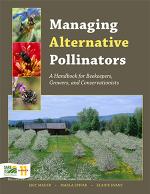
A Handbook for Beekeepers, Growers and Conservationists
This first-of-its-kind, step-by-step, full-color guide provides information on rearing and managing bumble bees, mason bees, leafcutter bees and other bee species that provide pollination alternatives to the declining honey bee. Written by Eric Mader of the Xerces Society Pollinator Conservation Program; Professor of Entomology Marla Spivak; and Elaine Evans, author of “Befriending Bumble Bees,” the book includes expert information on the business and biology of pollination and how-to guidance on raising the alternative bee species.
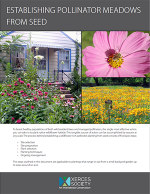
These guidelines provide instructions for establishing small pollinator meadows.
Essays on Invertebrate Conservation
The Spring 2010 issue of Wings Magazine includes articles on sea anemones, butterfly monitoring, katydids, and more.
Essays on Invertebrate Conservation
The Spring 2011 issue of Wings Magazine includes articles on the rediscovery of an endangered land crab species, the importance of milkweed species in the landscape, and migratory dragonflies.
Our Fall 2008 issue of Wings Magazine includes articles on grasshoppers, freshwater mussels, pollinator conservation, and more.
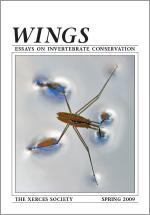
Essays on Invertebrate Conservation
The Spring 2009 issue of Wings Magazine includes articles on ephemeral water holes, photographing butterflies, deep-sea corals, and more.