
As a science-based organization, the Xerces Society produces dozens of publications annually, all of which employ the best available research to guide effective conservation efforts. Our publications range from guidelines for land managers, to brochures offering overviews of key concepts related to invertebrate conservation, from books about supporting pollinators in farmland, to region-specific plant lists. We hope that whatever you are seeking—whether it's guidance on making a home or community garden pollinator-friendly, advice on developing a local pesticide reduction strategy, or detailed information on restoring habitat—you will find it here!
Find Publications
Use the search functions to sort by publication type (books, guidelines, fact sheets, etc.), location, and/or subject (agriculture, gardens, pollinators, pesticides, etc.).
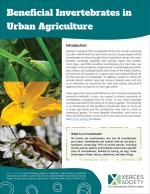
Decision-making on farms and gardens of any size can be a balancing act, often with limited time, labor, and resources. Supporting beneficial invertebrates on farms through habitat installation comes with many benefits. Lacewings, predatory and parasitic wasps, flies, beetles, native bees, and other beneficial invertebrates play vital roles, day and night, in the production of agricultural crops through pollination, pest control, and building healthy soils.
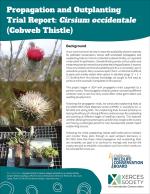
In our continued work to help increase the availability of plant materials for pollinator conservation, Xerces staff conducted propagation and outplanting trials on Cirsium occidentale (cobweb thistle), an important nectar plant for pollinators. Cobweb thistle provides critical pollen and nectar resources for monarchs and other declining pollinators. However, it has very limited commercial availability and thus is not widely used in restoration projects. Building from this industry knowledge, we sought to find ways to produce more successful transplants for this species.
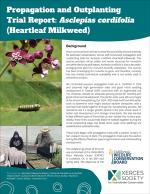
In our continued work to help increase the availability of plant materials for pollinator conservation, Xerces staff conducted propagation and outplanting trials for Asclepias cordifolia (heartleaf milkweed). This species provides critical pollen and nectar resources for monarchs and other declining pollinators. Heartleaf milkweed is also a key early-emerging host plant for monarch butterfly caterpillars.
Regarding Docket No. APHIS-2026-0628-0001
The USDA Animal and Plant Health Inspection Service (APHIS) authorizes and funds the use of insecticides to kill grasshoppers and Mormon crickets across 17 western states each year. This program poses risk for native pollinators, water quality and broader biodiversity.
Following a successful lawsuit by the Xerces Society and our partners, APHIS now must write a new management plan to rethink its pesticide-centered approach for grasshopper management to include more ecologically responsible management options.
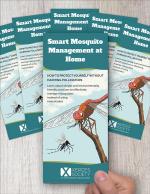
How to Protect Yourself Without Harming Pollinators
This brochure discusses the risks posed by backyard mosquito sprays and covers simple and environmentally friendly practices to effectively manage mosquitoes instead of using insecticides.

Art & Craft Activity Series
Learn more about the life cycle of the monarch butterfly (
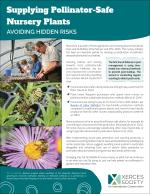
AVOIDING HIDDEN RISKS
Many producers strive to provide pollinator-safe plants, but may be unknowingly substituting other risky insecticides or using fungicides detrimental to pollinators. In this fact sheet, Xerces suggests which insecticides to avoid altogether and which to refrain from use on pollinator-attractive plants during the last two weeks before sale.
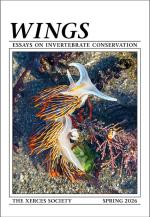
Essays on Invertebrate Conservation
We all have times when it is nice to turn our attention to positive stories. We hope you find the articles in this issue of Wings as uplifting as we do: discovering otherworldly sea slugs in tidepools; ways that you can help wildlife in your neighborhood; and eye-opening research into Monarch butterflies at overwintering sites. Enjoy.
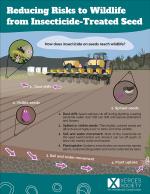
Guidance for Vermont Growers During Planting
Insecticide-treated seeds can expose pollinators, birds, freshwater invertebrates, and other wildlife through dust drift during planting, movement into soil and water, uptake into nearby plants, and consumption of spilled or visible seeds. When planting insecticide-treated seeds, take steps to reduce off-site movement and lower risks to wildlife. Integrated pest management (IPM) approaches such as scouting, monitoring, crop rotation, and threshold-based decision making can also help to inform use of insecticide-treated seeds, which are often planted even when pest risk is low.
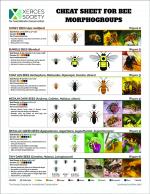
Bees are difficult to identify to species or family without having pinned specimens. But bee richness at a site can be measured by identifying bees to groups based on their morphology (also known as morphogroups), which use characteristics that can be seen in the field to categorize bees.