Starting a pollinator garden at home can feel daunting. But fear not — everyone has the power to Bring Back the Pollinators by creating their own slice of habitat. Read on as Xerces experts answer your most frequently asked questions about how to support your insect neighbors right in your own yard.
I rent or live in an HOA, can I still have a pollinator garden?
Absolutely! Pollinator gardens do not need to be big to be beneficial. Adding any amount of habitat in the form of pesticide-free flowering plants and nesting sites will help support pollinators. If you rent or live in an apartment, even a balcony can be a haven for pollinators with a few potted plants. If you have a yard to work with, you can start by adding a few pollinator plants to the space, either in pots or directly in the ground.
What if my community or HOA has rules that restrict pollinator habitat?
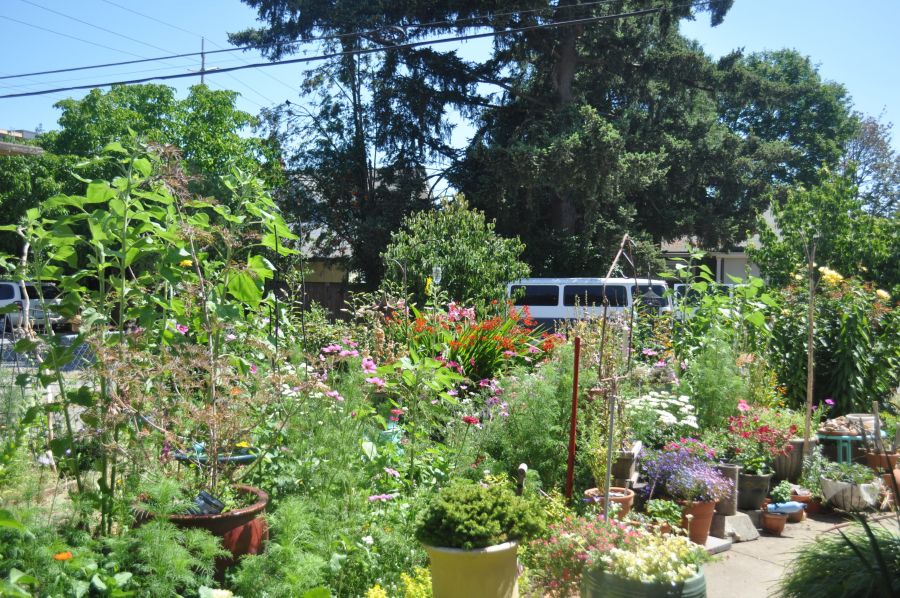
We know that HOA rules can sometimes be restrictive. You can help your HOA become more friendly to pollinators and residents by supporting healthy habitat. Does your HOA require things to be neat and “business up front”? If so, give mullet gardening a try! Based on the iconic hairstyle, this flavor of gardening involves keeping things neat and tidy in the front yard, and creating your wildlife habitat in the backyard where it is less conspicuous. You can also try container gardening. Rest assured that pollinators don’t have a preference for your front or back yard — your habitat will help support them all the same!
Keep in mind that towns and cities sometimes have ordinances that can restrict aspects of pollinator gardening, such as plant height or plant selection. Familiarize yourself with your own community’s relevant rules, and work with city leaders to modernize outdated ordinances that restrict pollinator gardening. Wild Ones has suggestions on what to do if your municipality gives you a warning or citation.
Do I have to get rid of my lawn or other favorite garden plants?
No! Yards can serve multiple purposes, and pollinator gardening doesn’t have to be all or nothing. While the more native habitat you create, the better it will be for pollinators and other wildlife, you can start small. Every flower helps.
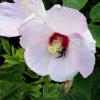
Consider adding just a few versatile native perennials. Some native powerhouse plants, such as crimsoneyed rosemallow, can support numerous pollinators and other beneficial invertebrates while still being very ornamental! Here are our top picks for pollinator-friendly plants native to the continental US.
If you don’t have room for new native perennials, there are other things you can do. Allowing your kitchen herbs to flower, such as rosemary and thyme, can help attract and support pollinators. Some solitary bees will nest in hydrangea stems if you break off the tips to reveal the pithy centers. Many pollinators and beneficial invertebrates rely on natural microhabitats for nesting and overwintering. Leave some undisturbed bare ground, logs, leaves, and/or stems in your yard to help protect and support them!
Will a pollinator garden cause my yard to look different than my neighbors’?
Depending on what plants you choose and how you manage them, your plantings might look different, but that isn’t a bad thing. Your gardening practices can influence neighbors. Practices in individual yards can actually change what others find “acceptable” throughout their neighborhoods.
If you want to turn your entire yard into a pollinator habitat, that's wonderful! Bugs and other wildlife will thrive. But, pollinator gardening doesn’t require letting your pollinator plants look wild.
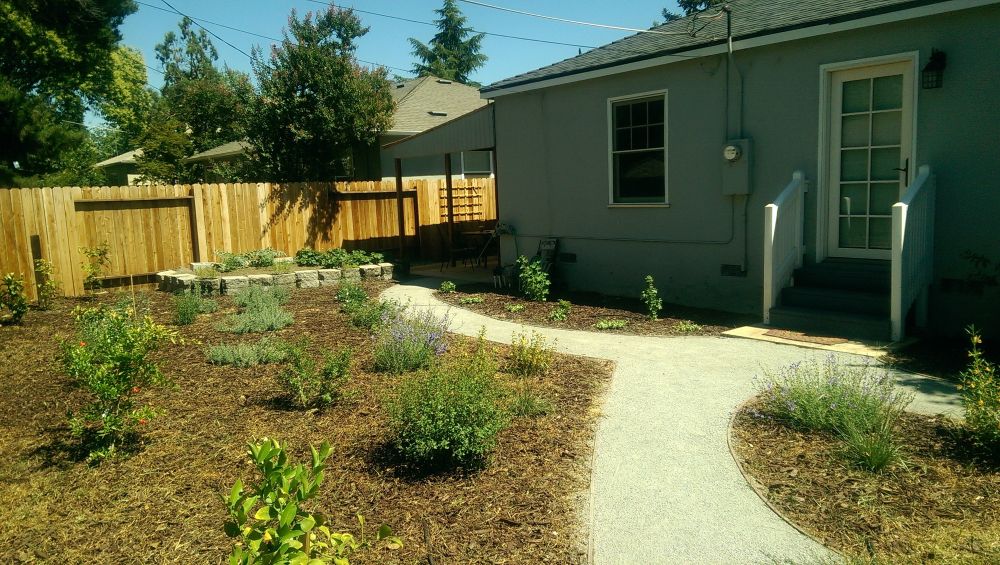
- Consider adding “cues to care” that show your habitat is a managed yard. Add edging, distinct beds, walkways, signage or other cues that show your habitat is intentional.
- You can start with just a small area of pollinator habitat and work from there.
- Many pollinator plants can have “conventional” appeal. There are beautiful perennials and showy annual wildflowers that provide great resources while also being visually striking. For natives that don’t “read as weeds”, choose lower-growing plants with larger blooms.
- When selecting plants, consider whether or not they will spread quickly. “Spreaders” might need more diligent management to keep them where you want them.
- Pollinator plants can be divided, trimmed, or pruned to keep them growing happily within small areas.
Will pollinator gardening be more difficult or expensive than keeping a traditional lawn?
In many ways, pollinator gardening can be both easier and cheaper than keeping a traditional lawn. Native pollinator plants are adapted to your local conditions. This means that once they are established, they can thrive with some regular hand weeding and without added water, nutrients, and pesticides. In contrast, most species of turfgrass are non-native and don’t perform well without extra help. While many people default to regular mowing and using expensive inputs — extra water, fertilizer, and pesticides — that puts a strain on your wallet, your free time, and the environment.
Still on the fence? It is okay to start small! Pollinator gardening does not have to be a big project to be beneficial. In fact, even one native plant, a small patch of wildflowers, a small pile of leaves, and a few stems can support pollinators with food and shelter.
Will wildlife gardening decrease my property values?
Despite common fears and misconceptions, there is no evidence that gardening for pollinators and other wildlife will hurt the value of your home. On the contrary, some features of pollinator habitat, like mature and healthy native trees, can boost property values. Species like oaks, willows, and maples provide plentiful food and shelter for pollinators while also boosting your curb appeal. Potential home buyers also value landscapes that are easy to care for. Since many native plants are easier to keep looking great than traditional turf and non-native ornamentals, this makes regionally adapted native plants a win-win for you and wildlife
Furthermore, a yard with habitat will be attractive to other like-minded people who would view a diverse, established native plant garden as a plus, and pay a premium for it.
Do pollinator gardens harbor rodents?
A well-planned and maintained pollinator habitat will not harbor rodents. Generally, rats and mice in the yard are looking for food and shelter. Pollinator gardens alone will not meet these needs, as rats need more than just flowers, veggies and fruits: to sustain a population, they need sources of protein and fats. Because of this, “sanitation”, or limiting their access to tasty foods, will play the biggest role in preventing rodents.
- Make sure trash cans are sealed
- Pick up fallen fruits or vegetables
- Home compost should be in a rat-proof container
- Make sure your house does not have entry points for rodents!
Will my pollinator habitat attract mosquitoes and ticks?
Mosquitoes need standing water to reproduce, as the larvae need water to survive. Pollinator habitat will not increase mosquito populations, but standing water will! Mosquitoes only need one inch of water to reproduce and can develop from egg to adult in only 5-10 days.
- Dump water from buckets and trash cans, look for hidden flower pots that are filled with rainwater, and ensure gutters aren’t clogged.
- The earlier you start, the better! Learn more about mosquito management at the yard and community level.
Ticks can be a tricky pest to manage, but having pollinator plantings doesn’t necessarily increase your risk of a tick bite!
- Forests are the largest source for nymphal ticks in mixed residential landscapes, so in yards, ticks are found near edges abutting wooded areas most often.
- Ticks also require humidity to survive, and are found more frequently in areas with long grass. Keeping play areas, paths, and turf spaces open, sunny, dry, and mowed can reduce ticks.
- Remove ground covers — in particular barberry — and fallen leaves in places people visit.
- To reduce the risk of tick encounters, add plant diversity and taller pollinator vegetation in other parts of the yard, where people don’t recreate or walk.
Will I (or my children or pets) be stung by bees or wasps?
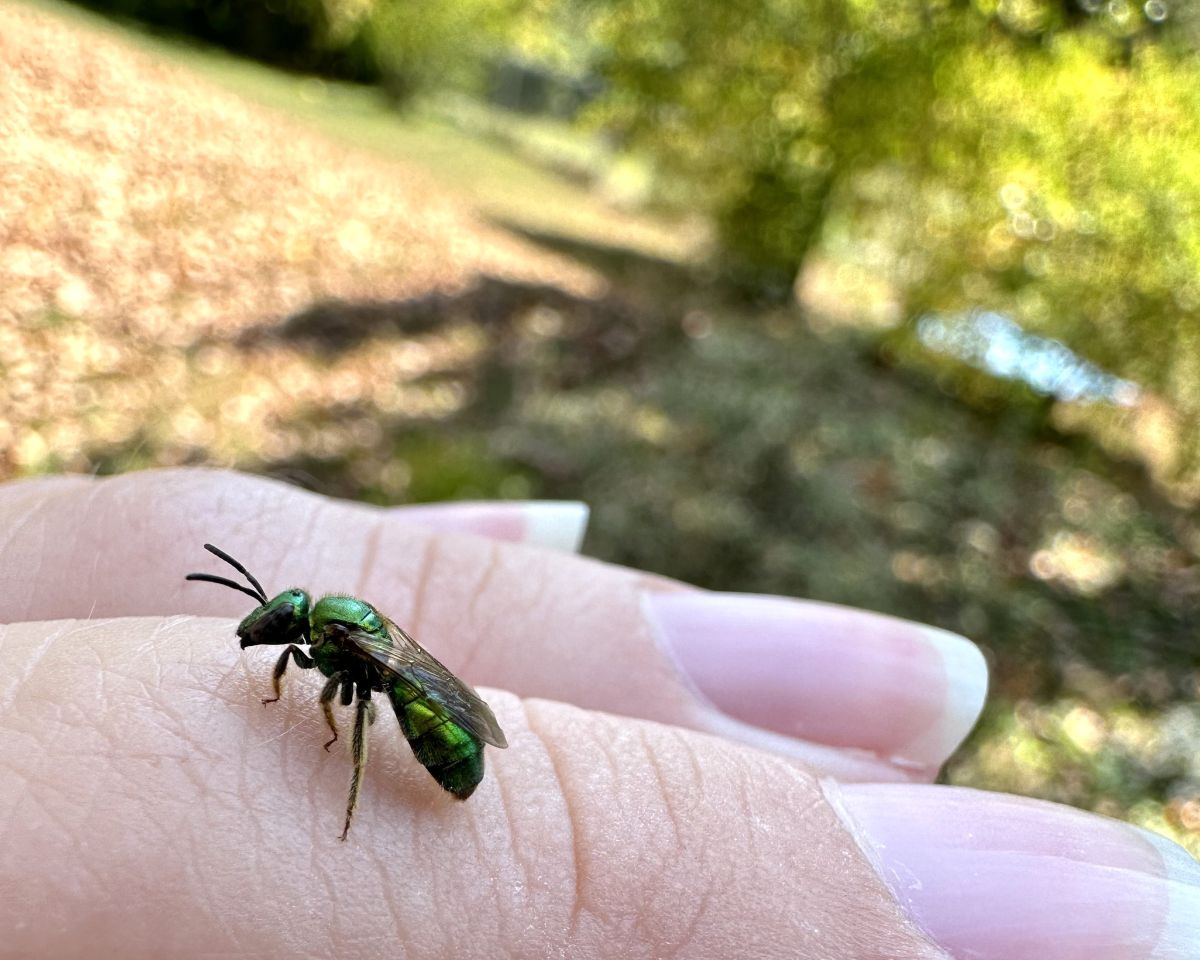
Native bees tend to be very docile because they are solitary and not trying to defend a large colony. Most are very small - the size of a grain of rice or smaller! But even social bees with a hive, like bumble bees and European honey bees, do not tend to sting while foraging, since they are simply focused on gathering food.
Similarly, most of our thousands of native wasps are also quite friendly. Yellow jackets and hornets tend to be the most defensive, but these can be present in your yard regardless of whether you have pollinator habitat. They tend to nest in cavities like old rodent holes and come into contact with people when their nests are nearby, or they are attracted to sugary drinks or protein in our picnics or trash.
Bees and many wasps are stinging insects, so use appropriate caution. Bee sting allergies can certainly be severe for some people. To avoid stings, if a bee or wasp flies near or lands on you, don’t slap or grab at it. Give them space to gather their food and live their lives!
Will my pollinator plants cause allergies?
Occasionally, people think that native pollinator plants are allergy culprits. This isn’t true! In fact, plants that are insect-pollinated are generally not the ones that cause hay fever and seasonal allergies. Flowers pollinated by insects generally produce relatively little pollen, with larger pollen grains that often have structures that allow them to stick to pollinators. As a result, pollen from these species is not often blown around. These species also often invest resources into nectar, which helps draw in pollinators.
Meanwhile, wind-pollinated plants, such as pine trees and grasses, have lightweight pollen that is easily blown by the wind. These plants produce large amounts of pollen, since they can’t rely on pollinators moving pollen grains from flower to flower. These are the plants that cause many seasonal allergies, due to the large amounts of pollen they produce and the fact that it is carried by the wind.
However, there can be lookalike plants! People may confuse goldenrod, an insect-pollinated plant, with ragweed, a wind-pollinated plant. But as long as you plant pollinator-attractive plants, they will be unlikely to increase your chances of allergies.
Will I need to use pesticides to maintain my wildlife garden?
Luckily, no! Most pollinator gardens thrive with minimal pest issues. In fact, finding holes or insect nibbles on leaves is a great sign in your garden! It means that your plants are providing shelter and food for all sorts of great invertebrates. But, if a pest issue does arise, there are many ways to keep problematic insects, weeds, and plant diseases at bay without using chemical pesticides. In fact, doing so is important for making sure your garden remains safe for the wildlife visiting it.
Using pesticides will not be an effective solution if the conditions that allow the pest to thrive aren’t taken care of. Non-chemical methods will be more effective in the long term and safer for wildlife than pesticides.
Bugs aren’t really my thing. Does pollinator gardening have any benefits for me?
Many people are afraid of insects or aren’t interested in having them in their yard. Luckily, creating pollinator habitat around our homes has many more benefits that go beyond the bees and the butterflies. No matter what you and your community are interested in, we are sure that pollinator habitat has something for everyone. Pollinator-friendly habitat can:
- Beautify your yard and neighborhood.
- Be easier and cheaper to maintain than traditional turfgrass or non-native ornamentals.
- Save lots of water compared to the water needed to maintain traditional turfgrass or non-native ornamentals.
- Cool down the neighborhood and reduce energy costs, especially by planting native trees.
- Tolerate stress like pests, heat, and drought better than turf or non-native ornamentals.
- Manage stormwater and help filter water.
- Support other beneficial wildlife, like birds.
- Create a happier, healthier community!
Looking to foster a love of insects among your friends and loved ones? There are many ways to get involved and learn more about these amazing creatures!


Jacqueline works with Xerces partners and community leaders to reduce pesticide use in towns, cities, and campuses through strategic outreach and policy action. Prior to joining the Xerces Society, Jacqueline worked with local governments in Colorado and Florida to enhance their integrated pest and pollinator management, promote biological control, and reduce reliance on pesticides. Her greatest passion is working directly with community members and decision makers to protect the invertebrate life that sustains us.