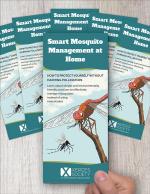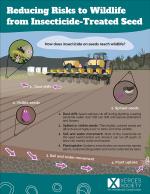
As a science-based organization, the Xerces Society produces dozens of publications annually, all of which employ the best available research to guide effective conservation efforts. Our publications range from guidelines for land managers, to brochures offering overviews of key concepts related to invertebrate conservation, from books about supporting pollinators in farmland, to region-specific plant lists. We hope that whatever you are seeking—whether it's guidance on making a home or community garden pollinator-friendly, advice on developing a local pesticide reduction strategy, or detailed information on restoring habitat—you will find it here!
Find Publications
Use the search functions to sort by publication type (books, guidelines, fact sheets, etc.), location, and/or subject (agriculture, gardens, pollinators, pesticides, etc.).
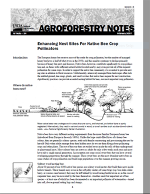
Agroforestry Note #34, General #8 [Agroforestry Notes, February 2007]
This fact sheet from the USDA National Agroforestry Center provides an overview of ways to enhance landscapes to support native bees.
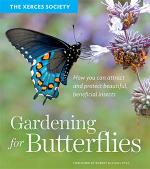
How you can attract and protect beautiful, beneficial insects
Protect and nurture the best-loved of garden guests: butterflies, nature’s kaleidoscopes with wings. The Xerces Society introduces you to a variety of butterflies who need our help, and provides suggestions for native plants to attract them, habitat designs to help them thrive, and garden practices to accommodate all their stages of life.
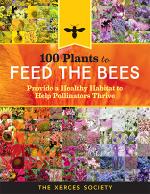
Provide a Healthy Habitat to Help Pollinators Thrive
100 Plants to Feed the Bees offers browsable profiles of 100 common flowers, herbs, shrubs, and trees that attract bees, butterflies, moths, and hummingbirds.
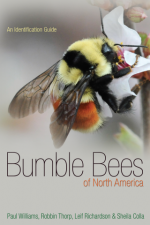
An Identification Guide
A landmark publication, Bumble Bees of North America sets the standard for guides and the study of these important insects.
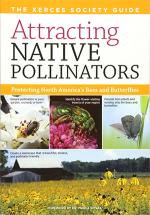
Protecting North America’s Bees and Butterflies
Attracting Native Pollinators is Illustrated with hundreds of color photographs and dozens of specially created illustrations across four sections: pollinators and pollination, taking action, bees of North America, and creating a pollinator-friendly landscape. Read it for your own enjoyment or use it as a teaching guide to inform others.

Essays on Invertebrate Conservation
The importance of tackling climate as part of an invertebrate-conservation agenda is underscored by modeling studies that show the impact of climate change on the small creatures that sustain us. Depending on the amount of warming, as much as 49 percent of invertebrates may disappear from half of their current ranges.
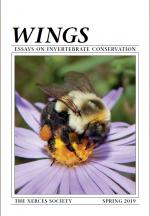
Essays on Invertebrate Conservation
In a time of growing environmental threats, what we do in our home towns and neighborhoods is increasingly important.
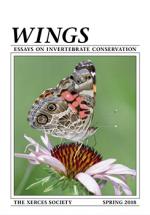
Essays on Invertebrate Conservation
Grasslands are among the most threatened habitats; easy to build upon or plow up, they are often the first to go. This issue of Wings looks at the beautiful wildlife that grasslands support, and some of the management problems faced by conservationists.

Essays on Invertebrate Conservation
There seems to be a constant flow of bad news about environmental losses and declining wildlife populations. But there are also individuals and organizations working to create positive change, helping to turn the tide and bringing hope for the future.
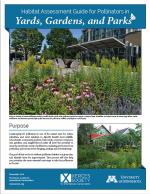
The goal of this tool is to evaluate pollinator habitat at a given urban, suburban, or rural site and identify areas for improvement. This process will also help users prioritize the most essential next steps to take for pollinators at the site.